How to Improve Greenhouse Production – 4 Tips for Better Yields and Lower Costs
In this blog entry, our experts dive into greenhouse productivity and efficiency. We’ve compiled their insights into 4 tips any grower can implement to improve yields and reduce production costs.
Greenhouse cultivation is one of the most popular types of controlled environment agriculture. They’re extremely versatile – ranging from low-tech tunnels, to advanced, automated, fully controlled growing environments. They also cover almost all types of crops – from vegetable greenhouses to flower greenhouses.
However, no matter what type of greenhouse or glasshouse you grow in, there are always ways to improve production, increase efficiency, and reduce costs.
What Is Greenhouse Production?
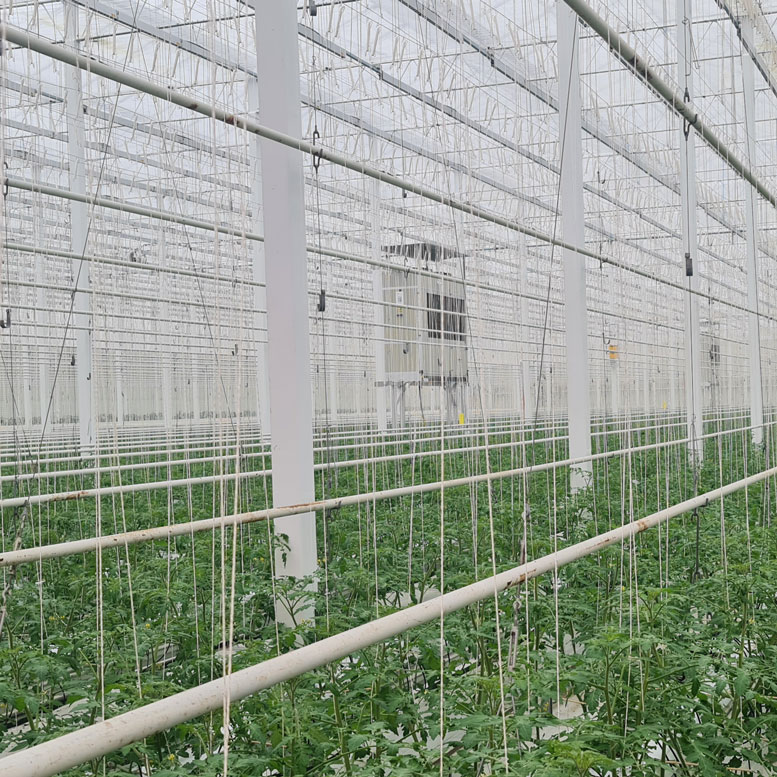
Greenhouse growing begins with a simple concept – covering the plants. By covering your crops, you can provide them with better, more consistent conditions. This can be done using simple plastic covers, all the way to glass buildings with retractable thermal screens and high-end climate control technologies.
Modern greenhouse growers take things a few steps further than simply covering the plants. Creating a closed growing environment lets them control all aspects of cultivation, from lighting, through temperature, to humidity, and more.
With so many factors to consider, and equipment to use, fine-tuning production can be complicated. However, there are several steps any greenhouse operator can take to improve effectivity, resulting in larger yields, higher-quality products, and even lower costs.
The following tips are relevant to all types of greenhouses and glasshouses, including vertical farms and hydroponics. They’re also suitable for all types of crops, ranging from vegetables, to flowers, nurseries and more.
1. Add or Upgrade Greenhouse Lighting
Light, or radiation, is one of the most important factors for plant growth. All plants require radiation in order to photosynthesize and produce the carbohydrates required to grow and bear fruit.
Use Grow Lights to Improve Growth
In nature, the sun provides the light needed to grow. However, relying on sunlight alone isn’t as efficient, as the amount of light varies, both throughout the day and throughout the year. This means the plants won’t be able to consistently receive their ideal lighting.
To combat this issue, you can add grow lights to your greenhouse, in order to supplement, or even replace sunlight. This ensures optimal lighting conditions for your plants, regardless of weather, or the cleanliness and clarity of your roof.
Every plant has its own lighting requirements, which include the length of daylight, radiation intensity, and light spectrum. So, by controlling the lighting, you can increase the amount of light your plants get, elongate the day, and make sure you provide the best spectrum for their growth and development.
Upgrade to Efficient Lighting
If you already have greenhouse lights, you may be able to improve production and save energy costs by upgrading them. For example, efficient LED lighting is much more efficient than traditional HPS lighting, saving as much as 30% on electricity costs. Some LED lights also provide more control over light intensity and spectrum.
2. Control Greenhouse Temperature
Temperature is another critical factor for greenhouse crops. All plants have a preferred temperature range, in which they grow and develop at the highest rate and produce the largest and healthiest fruit or flowers.
Simply covering your crops using plastic tunnels can go a long way. However, the more control you can gain over temperature, the better. The most advanced facilities fully control temperatures, providing the ideal temperature range for the crops, at all times.
Greenhouse Heating Methods
You can control greenhouse temperatures using a variety of different systems and techniques.
As heating is most often what’s necessary in a greenhouse, rather than cooling, using hot water pipes and boilers is an extremely common heating method. Additional popular heating and cooling systems include gas heaters, electric heat pumps, HVAC, or other air conditioning units.
3. Insulate the Greenhouse
Controlling your greenhouse temperature is a great way to improve productivity. However, heating can only go so far, if your greenhouse or glasshouse isn’t insulated properly.
Reduce Heat Loss
A poorly insulated structure will suffer from a lot of heat loss, and you may struggle to maintain ideal temperatures. Even if you do manage to do so, it will require much more energy, in the form of fuel or electricity, to maintain longer heating periods, at a higher intensity.
On the other hand, a well-insulated greenhouse will retain heat for long periods, requiring much less heating to achieve ideal results. It can also reduce your heating system requirements, letting you use smaller systems, resulting in lower operational costs and less maintenance, as well as a smaller initial investment, if you’re just building your facility.
Improve Insulation and Install Energy Screens
Greenhouse insulation can come in different forms. First, you can seal any gaps in your cover material, cracks between windowpanes, loose vents, etc. Once you’ve sealed the space, you can begin operating within a closed environment, meaning closed windows, doors, and vents. This allows you to start optimizing your climate control and fine-tune your growing conditions.
The final step most growers take to improve insulation is to install energy screens and curtains, sometimes referred to as thermal screens. Screens further insulate the space by creating an additional buffer between the interior and exterior. You can also combine or layer several screens to further amplify their impact.
4. Control Humidity in the Greenhouse
Avoiding ventilation and insulating the greenhouse is great for retaining heat. However, it does lead to a different problem – humidity.
The Problem with Greenhouse Humidity
Plants in the greenhouse constantly transpire and evaporate water. So, in any closed environment, they will rapidly increase humidity, pushing it to 100% relative humidity.
High humidity is problematic in a greenhouse for several reasons. First, is molds, mildews, and other diseases. Some of the most common diseases, such as powdery mildew and gray mold, are a direct result of high moisture content.
Additionally, high humidity slows and inhibits plant growth. This is due to the plants’ physiological processes. Transpiration is the driving force that causes plants to take in water and nutrients from the soil.
But, when relative humidity approaches 100%, they aren’t able to do so. There simply isn’t enough “room” in the air for more water vapor. This can slow down or even stop the plants’ development.
Use Dehumidifiers to Control Humidity
In order to combat the humidity that builds up in a closed greenhouse, you can use dehumidifiers.
Dehumidification systems, such as DryGair, are designed specifically for greenhouse humidity control. DG systems provide the dehumidification capacity needed for commercial, large-scale greenhouse production, at a high efficiency rate.
A New Way to Grow
“A New Way to Grow” is a greenhouse cultivation approach that combines these four tips. Implementing this growing strategy gives you full control over your greenhouse, including all aspects of climate control.
Growers around the world already utilize this concept to successfully increase yields, improve quality, and reduce energy costs. This can be done with all common greenhouse crops, and all types of controlled environment agriculture – greenhouses, glasshouses, and indoor farming.